
Myrtle Beach Criminal Records Search
Myrtle Beach is the largest city in Horry County and one of South Carolina's most visited destinations, home to more than 35,000 permanent residents and millions of tourists each year. Criminal records in Myrtle Beach are held by the Myrtle Beach Police Department, the Horry County courts, and the South Carolina Law Enforcement Division. The volume of activity in this city means a wide range of criminal case records, arrest records, and court filings exist across multiple agencies. This page explains where to find them and how to conduct a Myrtle Beach criminal records search.
Myrtle Beach Police Department Records
The Myrtle Beach Police Department is the primary law enforcement agency for incidents within city limits. The department generates arrest records, offense reports, and incident documentation for criminal activity that occurs inside the city. Myrtle Beach was incorporated in 1938 and became a city in 1957, taking its name from the wax myrtle shrub found along the coast.
Police records can be requested through the department's records division. Requests are governed by South Carolina's Freedom of Information Act under SC Code § 30-4-10, which grants the public the right to inspect and copy public records. The department must respond within ten business days under § 30-4-30, and fees may apply for copying and staff time involved in fulfilling the request.
The Myrtle Beach Police Department also operates a Victim Advocate Division, which assists crime victims with navigating the criminal justice process and accessing relevant records and services. The department's Public Safety Campus houses police, fire, and emergency management under one facility.
For police department records, the Myrtle Beach Police Department page provides contact information and details on services offered. The department handles a significant volume of incidents given the city's year-round tourist activity.
Myrtle Beach FOIA Records Requests
The City of Myrtle Beach provides a formal process for requesting public records through its FOIA department page. This page includes contact information for the records office, a fee schedule outlining what may be charged for fulfilling requests, and information on the timeframes established under SC FOIA law.
South Carolina FOIA under § 30-4-10 covers records created by or held by public bodies, including city departments. This encompasses police incident reports, arrest records, and other criminal records generated by city agencies. Requests must be specific enough to allow the city to identify the records being sought.
Exemptions under § 30-4-40 apply to records such as ongoing investigation files, materials that could endanger someone's safety, and certain personnel records. When a record is withheld, the city must provide a written explanation identifying the exemption that applies. If a request is denied in part, the non-exempt portions must still be released.
Note: The Myrtle Beach FOIA office handles requests for city government records only; records held by Horry County agencies must be requested from those agencies directly.
Myrtle Beach Municipal Court Records
The Myrtle Beach Municipal Court handles ordinance violations, traffic cases, and lower-level criminal matters within the city. Court services, payment options, and contact information are available through the City of Myrtle Beach website. Municipal court records are separate from Horry County court records and must be requested from the municipal court office.
Cases involving felony-level charges are transferred to Horry County General Sessions Court. At that point, the Horry County Clerk of Court takes over maintenance of the case file. Municipal court records cover only the cases handled within the municipal court's jurisdiction, which generally means lower-level offenses and city ordinance matters.
The image below is from the SLED CATCH portal, which provides statewide criminal history searches covering all Myrtle Beach and Horry County records.
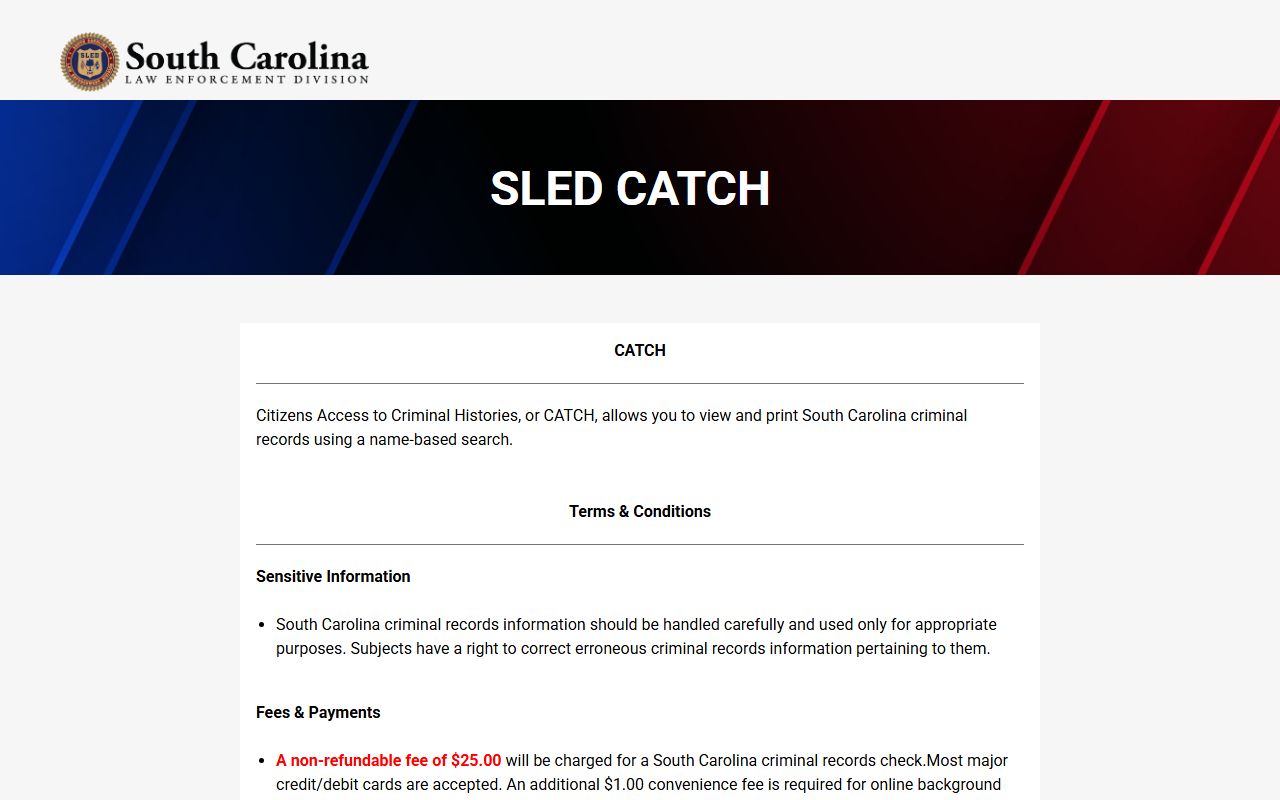
SLED CATCH draws from all contributing agencies in South Carolina, including the Myrtle Beach Police Department and Horry County Sheriff's Office.
Horry County Court Records for Myrtle Beach
Horry County General Sessions Court handles all felony-level criminal cases originating in Myrtle Beach. The Horry County Clerk of Court maintains criminal filings, including indictments, plea agreements, sentencing records, and case dispositions. The clerk's office can be reached at 843-915-5080.
The Horry County Public Index provides free online access to court records filed in Horry County courts. You can search by name, case number, or filing date. This is the most direct free tool for finding Myrtle Beach criminal case records that have been filed at the county level. Results include case status, listed charges, hearing dates, and disposition data.
For records not found online, a visit to the Horry County Clerk of Court or a written request to the clerk's office is the next step. Certified copies of court documents are available for a per-page fee. Identifying the correct case number before requesting copies helps speed up the process.
The Horry County Clerk of Court office is open Monday through Friday during normal business hours. Staff can assist in locating case files and explaining what documents are available for a given case.
Horry County Sheriff and Police Records
The Horry County Sheriff's Office operates the J. Reuben Long Detention Center and provides law enforcement for unincorporated Horry County. The Sheriff's Office handles court security and civil process for the county. Booking records and detention information for individuals held at the J. Reuben Long Detention Center may be different from records held by the Myrtle Beach Police Department.
The Horry County Police Department is a separate full-service law enforcement agency that uses a precinct approach, operating five precincts that cover the county. Online reporting is available for certain offense types. The county police handle incidents outside city limits, while the Myrtle Beach Police Department covers incidents within the city.
The Horry County Sheriff bookings page provides an inmate search with mugshots, current charges, and bond information. This database is updated daily and is useful for checking whether someone has been recently booked into the Horry County detention facility.
Myrtle Beach Criminal History via SLED CATCH
SLED's CATCH program is the statewide criminal history search tool. For a $25 fee set by SC Code § 23-3-115, the CATCH system returns a comprehensive South Carolina criminal history report. The report draws from arrest data and court dispositions submitted by agencies across all South Carolina counties, including Horry County agencies that serve Myrtle Beach.
Given the volume of criminal activity in a tourist destination like Myrtle Beach, a SLED CATCH report can be a useful tool for getting a complete picture of someone's South Carolina criminal history rather than just reviewing records from a single agency or county. Results include both arrests and final dispositions where those have been reported.
The SLED main site also provides access to the SC Sex Offender Registry. The registry is searchable by name and shows current registration status, registered address, and offense information for individuals required to register under South Carolina law. The registry is a free public resource available statewide.
SLED serves as the state's central repository for criminal history data. Local agencies, including those in Horry County, submit arrest records and court dispositions to SLED on an ongoing basis. Reported information is incorporated into the CATCH database and reflected in criminal history reports.
Myrtle Beach Arrest Records and Bookings
Arrest records for incidents within Myrtle Beach city limits are generated at the time of booking by the Myrtle Beach Police Department. These records document the arrest date, the charges filed, and the assigned case number. Many arrest records are public under SC FOIA, subject to the exemptions for active investigations and protected materials.
Booking information for individuals held in Horry County facilities is accessible through the Horry County Sheriff's bookings search tool. This tool is useful when you know an arrest has occurred but want to verify the charges and current detention status.
Court records complement arrest records by showing what happened to a case after the arrest. The Public Index and Horry County Clerk of Court records show charges that were formally filed, plea outcomes, trial results, and sentences. Together, these sources provide a full picture of a Myrtle Beach criminal case from arrest to final disposition.
For individuals who served time in a South Carolina state prison, the SCDC inmate search is a free online tool that shows current and former inmates in state custody. This covers state prison sentences and is separate from local jail records held by Horry County.
Accessing Myrtle Beach Court Records Online
The SC Judicial Branch operates the Public Index as the primary free online tool for accessing South Carolina court records. For Myrtle Beach cases filed in Horry County courts, the Public Index provides case status, charges, and disposition information that can be accessed from anywhere with an internet connection.
Searching the Public Index is free. You can look up cases by name or case number and view filings across criminal, civil, and family court divisions. While the system covers most cases, some older records may not be fully digitized, and certified copies require a formal request to the clerk's office.
The Horry County Public Index search is available at publicindex.sccourts.org/horry/. This county-specific access point is the most direct route for finding Myrtle Beach criminal case records filed in Horry County courts. For cases in the SC court system broadly, the statewide Public Index at publicindex.sccourts.org covers multiple counties simultaneously.
Note: The Public Index reflects records as they have been entered by court clerks; recently filed records may take a short time to appear, and records from courts that do not participate in the system may not be included.