
Florence County Criminal Records Online
Florence is the county seat and largest city in Florence County, located in the 12th Judicial Circuit of South Carolina. Criminal records for Florence originate with the Florence Police Department, the Florence County General Sessions Court, and the South Carolina Law Enforcement Division. The Florence County Courthouse handles criminal case filings for the county, while the city's police department maintains local arrest and offense records. This page explains how to search Florence criminal history, request court records, and use the free tools available online.
Florence Police Department Criminal Records
The Florence Police Department is the primary law enforcement agency within Florence city limits. The department generates arrest records, offense reports, and incident documentation for criminal activity that occurs inside the city. Records from the department are subject to South Carolina's Freedom of Information Act under SC Code § 30-4-10, which grants the public the right to inspect and copy public records held by government bodies.
Requests submitted to the Florence Police Department must receive a response within ten business days under SC Code § 30-4-30. The department may charge fees for copying and for staff time when fulfilling requests that require significant resources. Requests should describe the records being sought as specifically as possible, including names, dates, and incident numbers where available.
Certain records are exempt from disclosure under § 30-4-40. These include active law enforcement investigation files, records whose release could endanger personal safety, and other materials protected by state or federal law. When a request is denied, the department must provide a written explanation citing the specific exemption that applies.
For court records tied to Florence criminal cases handled at the county level, requests must go to the Florence County Clerk of Court rather than the police department. Police records and court records are held by different agencies and must be requested separately.
Florence County Court Records
The Florence County Clerk of Court maintains criminal and civil records for cases filed in Florence County courts. Florence County General Sessions Court handles all felony-level criminal cases originating in the city of Florence. The Clerk of Court is the official keeper of criminal case files, including indictments, plea records, sentencing orders, and case dispositions.
Florence County Government describes its mission as striving to be an exceptional place to live, work, and visit, and to provide high-quality public services that promote a safe and healthy community. The Clerk of Court office is a key part of the county's public records infrastructure.
The SC Judicial Department Public Index for Florence County provides free online access to criminal, civil, and family court records filed in Florence County. You can search by name, case number, or filing date. Results show case status, charges listed, hearing dates, and disposition information for active and closed cases. This is the most practical free starting point for searching Florence criminal case records without visiting the courthouse.
For certified copies of court documents, you will need to contact the Clerk of Court directly. Certified copies are available for a per-page fee and typically require a written request that identifies the specific case and documents needed.
Florence County Sheriff's Office Records
The Florence County Sheriff's Office handles law enforcement for unincorporated areas of Florence County. Arrest records and offense reports generated by Sheriff's deputies are separate from those held by the Florence city police department. When an incident occurs outside city limits, the Sheriff's Office is the relevant agency for records requests.
Sheriff's Office records are subject to SC FOIA under § 30-4-10. The same ten-business-day response window applies, and the same exemptions under § 30-4-40 may shield certain records from disclosure. A written records request identifying the specific incident or record sought is the standard way to begin the process.
When a criminal case is prosecuted after a Sheriff's Office arrest, the case file moves to the Florence County Clerk of Court at the General Sessions level. The Sheriff's Office retains the law enforcement records, while the Clerk of Court holds the court filings. Both sets of records may be relevant when researching a particular case.
Note: The Florence County Sheriff and the Florence Police Department operate independently; records from one agency are not automatically held by the other.
SLED CATCH and Statewide Criminal History
SLED's CATCH program is the statewide tool for obtaining a comprehensive South Carolina criminal history report. The fee is $25 per search under SC Code § 23-3-115. SLED draws from arrest data and court dispositions submitted by agencies across South Carolina, including Florence County agencies. A single CATCH search returns results from all South Carolina jurisdictions where criminal history has been recorded.
For Florence, a SLED CATCH report is useful when you want a complete view of someone's criminal history statewide rather than searching individual agencies. The report includes both arrests and final dispositions where those have been reported. It covers records submitted by the Florence Police Department, the Florence County Sheriff's Office, and courts in the 12th Judicial Circuit.
The SLED main website also provides access to the SC Sex Offender Registry, a publicly searchable database of registered sex offenders throughout South Carolina. The registry can be searched by name and includes current registration status and address information for individuals required to register under state law.
The screenshot below comes from the SLED website, which hosts the CATCH criminal history search portal used across South Carolina.
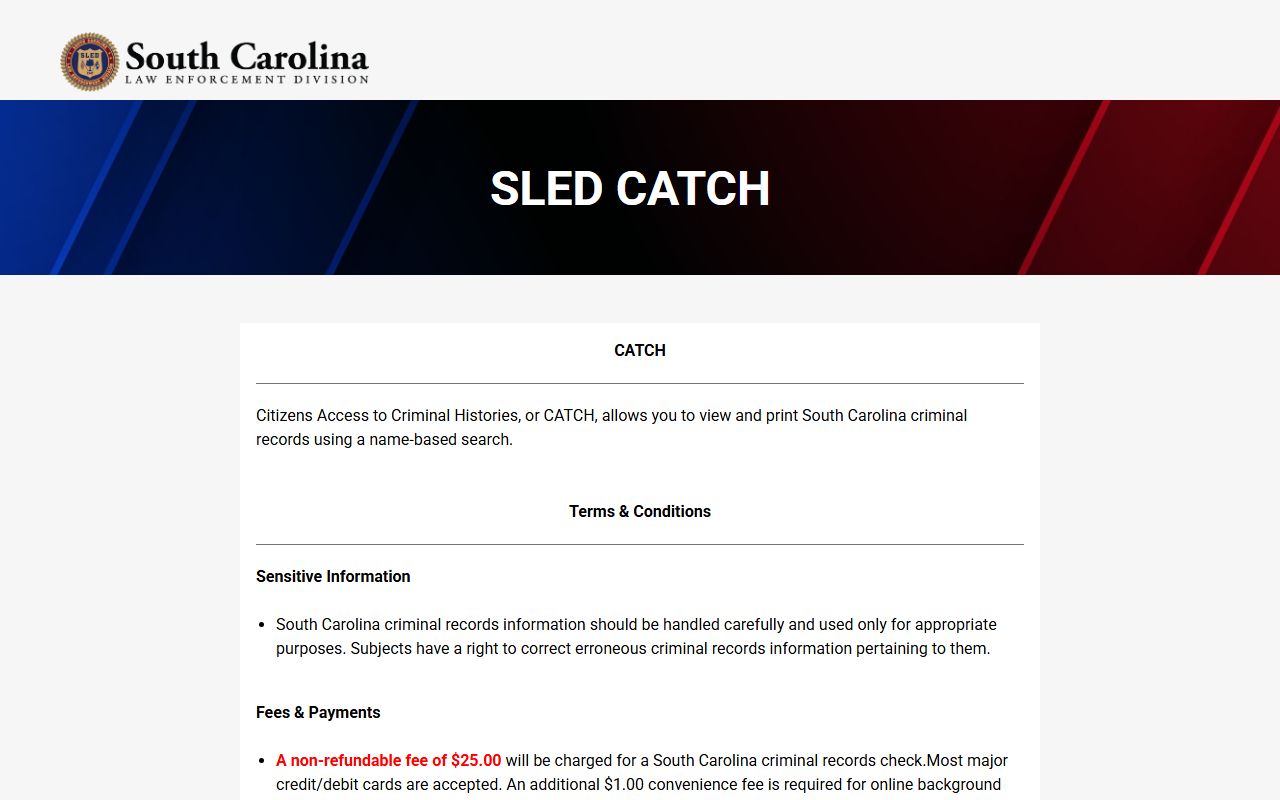
SLED serves as South Carolina's central repository for criminal history data, consolidating records from local agencies including Florence County law enforcement and courts.
SC Judicial Branch and Florence Court Records
The South Carolina Judicial Branch operates the Public Index as the primary free online tool for accessing court records across the state. For Florence cases filed in the 12th Judicial Circuit courts, the Public Index provides searchable case records that can be accessed remotely without visiting the courthouse.
The Public Index is updated regularly and reflects current case status for both active and closed criminal cases. You can search by the defendant's name, by case number, or by the date a case was filed. Results show the charges that were filed, the court where the case is pending, scheduled hearing dates, and final disposition information when the case has been closed.
The image below is from the SC Judicial Branch website, which hosts the Public Index for statewide court record searches including Florence County.
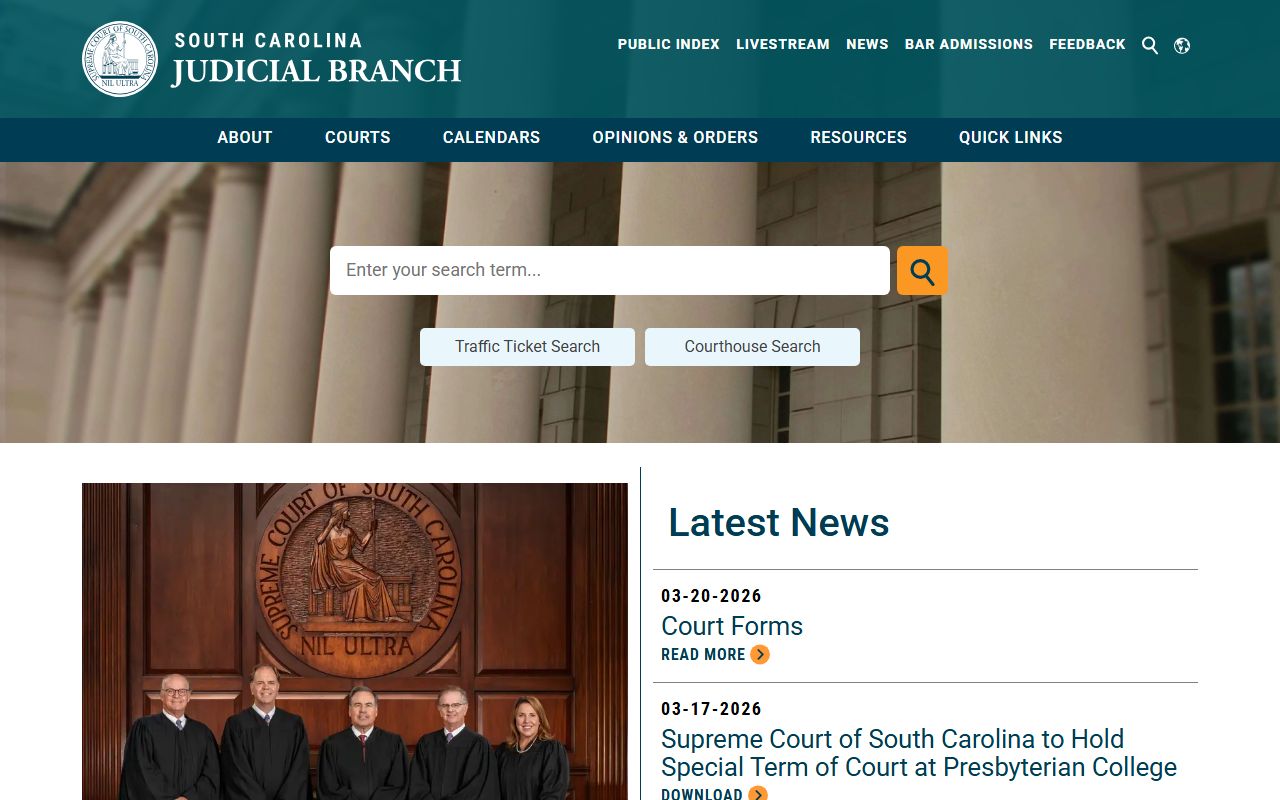
The SC Judicial Branch Public Index is the authoritative free online resource for Florence County criminal case records, covering filings in General Sessions, magistrate, and other courts.
For individuals who have served time in South Carolina state prisons, the SCDC inmate search provides free online access to current and former inmates in state custody. The SCDC database covers state-sentenced individuals and is separate from records for the Florence County Detention Center.
Florence Criminal Records and Public Access
South Carolina's FOIA framework under § 30-4-10 makes most criminal records held by government agencies public by default, subject to specific exemptions. The 12th Judicial Circuit courts, which include Florence County, generate a significant volume of criminal case filings each year. Most of these records are accessible through the Public Index or by request to the Clerk of Court.
Arrest records from the Florence Police Department and the Florence County Sheriff's Office document criminal arrests within their respective jurisdictions. These records are generally public unless they fall under the active investigation exemption or another category protected by § 30-4-40. Offense reports generated when criminal activity is reported but no arrest is made may also be requested through the appropriate agency.
Court records at the county level provide the most complete picture of how a criminal case was resolved. The Clerk of Court file typically includes the original charging instrument, any motions filed by the parties, plea agreement or trial records, and the final sentencing order. These documents together show the full arc of a criminal case from initial filing through disposition.
Juvenile records in Florence County, as throughout South Carolina, are sealed under § 63-19-2010. Cases involving juvenile defendants are not part of the public criminal records accessible through standard FOIA or court records requests.
Florence Criminal Records and Expungement
South Carolina's expungement statute at § 17-22-910 allows qualifying individuals to have certain criminal records removed from public access. Eligible cases include first-offense misdemeanor convictions, charges that were dismissed or resulted in acquittal, and cases where a pretrial diversion program was completed. Some drug-related offenses may also qualify under specific conditions.
For Florence criminal cases, expungement petitions are filed with the 12th Judicial Circuit court. The process requires identifying the relevant case, verifying eligibility under the statute, completing the petition form, and submitting it to the Clerk of Court. Once the circuit court grants an expungement order, SLED updates its criminal history database and the agencies that reported the original record are directed to seal or remove it.
Not every record qualifies. Violent felonies, certain repeat offenses, and other categories are excluded from eligibility. The specific offense, the final disposition, and whether all conditions of any sentence were met all factor into eligibility. Consulting a South Carolina attorney is the most reliable way to determine whether a particular Florence criminal record qualifies for expungement under § 17-22-910.